
Galvanized pipe, lead service lines and whole-house repipes
Repiping and water line replacement in York, PA
Repiping replaces old water supply pipe inside the house, and a service line replacement replaces the pipe from the curb to the house. Both usually come up for the same reasons in York: galvanized steel that has rusted nearly shut, repeated leaks, or a lead service line in a house built before 1934. New pipe is usually PEX or copper.
Water pouring or sewage backing up? Shut the main water valve, then call (717) 297-8733.
Emergency stepsSigns your house needs repiping
- Low pressure everywhere, getting worse over the years, especially when two fixtures run at once
- Rusty or brown water at the first draw in the morning or after you've been away
- Leaks at threaded joints on gray steel pipe
- Repeated pinhole leaks in copper
- Visible corrosion, flaking, or green buildup on pipes in the basement
- A mix of patched sections, where earlier owners replaced pieces of the system one at a time
- A lead or galvanized service line coming in from the street
How to identify galvanized, lead, copper and PEX pipe
Look at the water line where it comes through the basement or crawlspace wall, before the meter, and at the pipes overhead:
| Pipe | What it looks like | What it means |
|---|---|---|
| Lead | Dull gray, soft; a key scratch shows bright silver; a magnet won't stick; often a rounded bulb-shaped joint | Plan to replace it |
| Galvanized steel | Gray, hard, threaded joints; a magnet sticks | Rusts shut from inside; replacement is likely due |
| Copper | Penny-colored where scratched; soldered joints | Usually good for decades; replace if pinholes keep appearing |
| PEX | Flexible plastic tubing, often red, blue or white | Modern; no replacement needed |
| CPVC | Rigid cream-colored plastic | Can turn brittle with age; inspect for cracks |
Lead service line replacement in older York homes
This is the most York-specific reason to replace a water line. The York Water Company advises customers in homes built before 1934 to check their customer-owned service line for lead.
The service line runs from the curb stop near the street, under the yard or sidewalk, and through the foundation into your basement. York Water owns its side of the connection; the house side is the homeowner's responsibility.
About half of York City's homes were built before 1940, and many older homes in the neighborhoods around the city date from the same period, so lead and galvanized service lines aren't unusual. Replacement typically involves:
- Coordinating with York Water before work is scheduled, so their side of the curb stop can be handled.
- Getting the municipal permit for excavation and the new line.
- Digging at the curb and the foundation, then either trenching between them or pulling a new line through using a trenchless method.
- Installing new copper or approved plastic pipe, sealing the foundation penetration, and setting a new main shutoff valve inside.
- Flushing the line and restoring the yard or sidewalk.
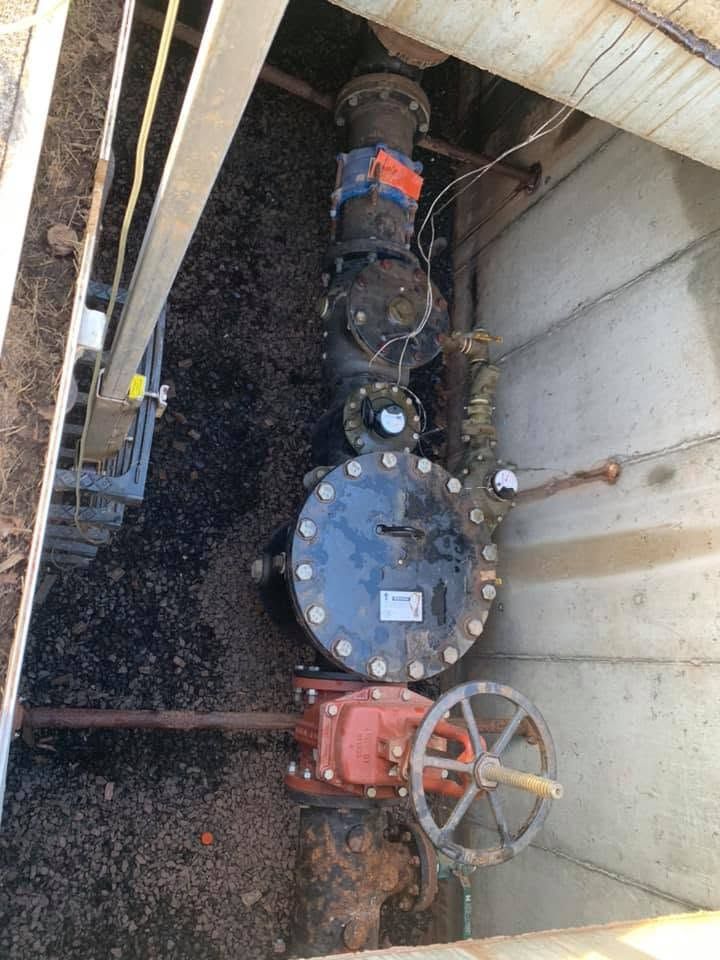
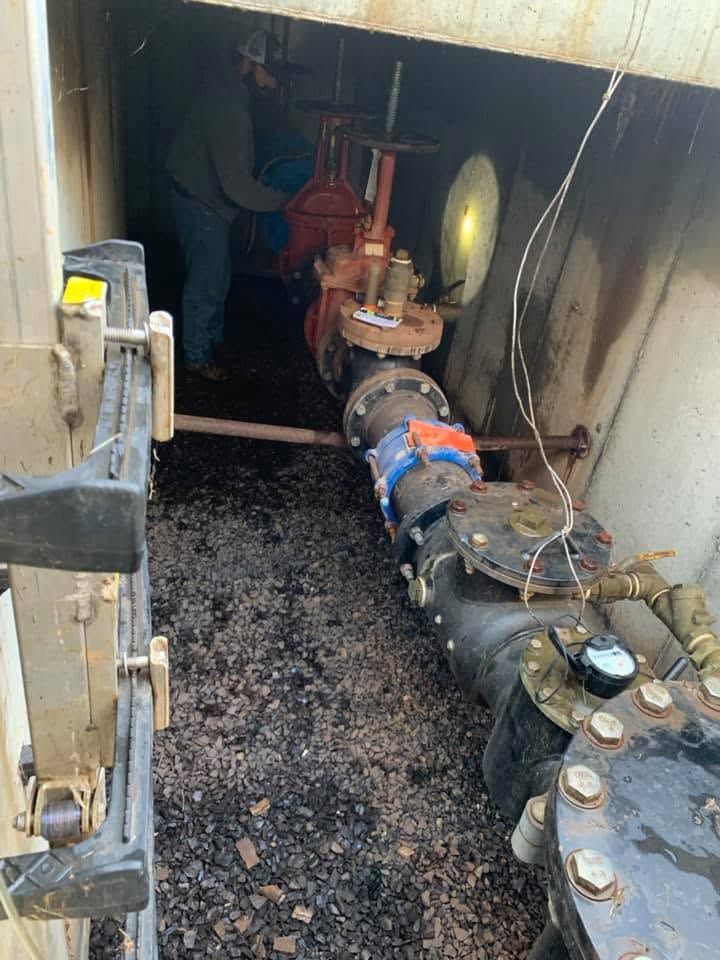
A new service line feeding corroded galvanized pipe inside the house won't fix low pressure, so the two jobs are often done together.
How whole-house repiping is done
- Plan the route. The plumber maps where the new lines will run, using open basement ceilings, closets and existing chases to limit wall openings.
- Run the new pipe while the old system stays in service, so water is off only for short periods.
- Make small access openings at each fixture to connect the new lines, with new shutoff valves at sinks and toilets.
- Switch over fixture by fixture, then disconnect and abandon or remove the old pipe.
- Pressure test the entire new system before walls are closed.
- Inspection, where the municipality requires one.
- Patch. Drywall and plaster repair is a separate step; ask whether it's included.
How much does repiping a house cost?
Repiping cost depends on the size of the house, the number of bathrooms and fixtures, how easy the walls and ceilings are to work through, and whether the service line from the street is replaced at the same time.
- House size and the number of bathrooms, kitchens and fixtures
- Access. An open basement ceiling makes runs easy; finished ceilings and plaster walls add labor
- Pipe material. PEX generally costs less to install than copper
- Whether the service line is included, and how deep and long it is
- Surface restoration at the curb, sidewalk or driveway for service line work
- Permits for repiping and excavation
- Wall and ceiling patching after the plumbing is done
When old galvanized pipe becomes an emergency
Galvanized pipe tends to fail suddenly at a rusted joint. Call right away if:
- A joint is spraying or pouring water. Shut the main valve.
- The main shutoff won't close or breaks when you turn it. Old gate valves on galvanized systems often seize. York Water customers can ask for the curb stop to be closed.
- You lose water pressure completely, which can mean a break in the service line.
- A wet spot or depression appears along the service line route in the yard.
What to expect after a repipe
- Expect some air in the lines at first; it clears after a day or two of use.
- Clean faucet aerators after the first week, since debris from the switchover can collect there.
- Keep a sketch or photos of where the new lines run.
- If you still have an old water heater, consider replacing it while the plumbing is new. See water heater repair and replacement.
Repiping is one of the larger plumbing jobs we handle in York, PA. For a single leak in otherwise sound pipe, leak detection and pipe repair is the place to start.
Repiping and water line replacement FAQs
How long does a whole-house repipe take?
For a typical house, a few days of work, with water shut off only during parts of each day. A larger house, finished ceilings, or a service line replacement at the same time extends that. Wall and ceiling patching afterward is usually a separate step.
PEX or copper: which is better?
Both are good choices. PEX is flexible, so it can be fished through existing walls with fewer openings, has fewer joints, and handles freezing better.
Copper is rigid, long-lasting, and preferred by some owners for exposed runs. Many repipes use PEX for most of the house.
Can I replace only part of the galvanized pipe?
Yes, and it's common to start with the main line and the most corroded runs. The catch is that every remaining galvanized section keeps rusting, and the junctions between old and new pipe are where the next leaks often appear. Replacing all of it at once usually costs less overall than doing it in pieces.
Will replacing my service line raise my water pressure?
If the old service line was galvanized and rusted inside, usually yes. If the inside piping is still galvanized, the improvement will be limited until that's replaced too.
Is lead in my service line dangerous if my water tests fine?
A single good test doesn't guarantee the line won't release lead later, especially after the pipe is disturbed or water chemistry changes. The York Water Company recommends that owners of homes built before 1934 check the service line material. Replacing a lead line removes the source.
Plumbing Pros
Low water pressure, rusty water, or a possible lead line?
Call (717) 297-8733. Describe the pipe where it comes into the basement, and we can usually tell you what it is and what replacing it involves.
Open 24 hours a day, 7 days a week